On May 25, 2015, Sam Altman sent an email to Elon Musk proposing a “Manhattan Project for A.I.” He envisioned a Silicon Valley research lab that would build enormously powerful artificial intelligence and share it with the rest of the world “via some sort of nonprofit.”
Mr. Musk replied that evening, saying the idea was “probably worth a conversation.” Before the end of the year, the two tech entrepreneurs founded a nonprofit they called OpenAI, which would go on to launch the global A.I. boom with the release of ChatGPT.
But by the time OpenAI’s chatbot was created, Mr. Musk had left the organization after a power struggle with Mr. Altman and others at the lab. He sued OpenAI in 2024, claiming that Mr. Altman took advantage of his financial resources and breached the lab’s founding agreement by putting commercial interests over the public good.
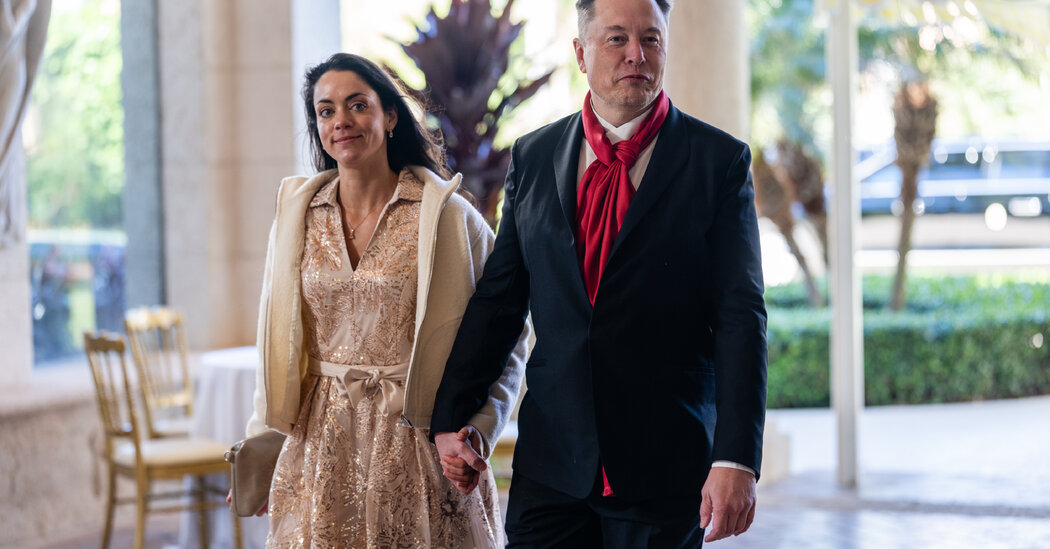
On Monday, jury selection is expected to begin in the federal courthouse in Oakland, Calif., for a trial to decide if Mr. Musk really was Sam Altman’s deep-pocketed dupe. The case will highlight the many personal squabbles and esoteric arguments that have driven A.I. development. Mr. Musk, Mr. Altman, and several other key industry figures, including Microsoft’s chief executive, Satya Nadella, and Mira Murati, OpenAI’s former chief technology officer, are slated to testify in the trial, which is expected to last several weeks.
Mr. Musk is asking for more than $150 billion in damages from OpenAI and Microsoft, OpenAI’s primary partner. He is also asking the court to remove Mr. Altman from OpenAI’s board and unravel a shift the company recently made to operate as a for-profit company.
The trial’s outcome could upend the tech industry’s A.I. race. OpenAI, which has emerged as one of the most important tech companies in the world, could be crippled just as it appears to be heading toward one of the biggest initial public offerings in history. A win for Mr. Musk would also be a win for OpenAI’s competitors, from industry giants like Google to young companies like Anthropic, as well as international competitors such as China’s DeepSeek.
But if Mr. Musk loses, Mr. Altman will continue to solidify control of a company that has become synonymous with corporate dysfunction. And OpenAI, which has expanded to more than 4,000 employees working in offices around the world, will be free to pursue a data center expansion plan that could cost hundreds of billions of dollars.
“This is just one front in a no-holds-barred billionaire battle for financial resources, government support and, ultimately, A.I. supremacy,” said Oren Etzioni, a veteran A.I. researcher who co-founded the Allen Institute for AI and the start-up Vercept.
Mr. Musk argues in his suit that OpenAI — now worth an estimated $730 billion as a for-profit company overseen by the original nonprofit — has abandoned its humanitarian mission in favor of monetary gain. OpenAI says that’s nonsense.
Mr. Musk also tried to recast OpenAI as a commercial enterprise before he left in 2018, according to emails filed as evidence ahead of the trial. And once the A.I. boom arrived, he created his own for-profit lab, xAI. That is now part of the rocket company Space X, which is expected to go public as soon as this summer, in an offering worth as much as $1.75 trillion.
The feud between Mr. Musk, 54, and Mr. Altman, 41, is typical of the schisms at A.I. companies over the years. Several times, top researchers have come together with plans to build powerful A.I., before fighting over best way to do it, parting ways and launching new companies.
“We don’t typically see Silicon Valley companies engaged in scorched-earth tactics in the courts, but Elon is singular,” said Anupam Chander, a professor of law and technology at Georgetown Law School. “When the richest man in the world sues you, you’re going to be worried about the suit, even if you feel that you are in the right.”
A nine-person jury will decide Mr. Musk’s claims against OpenAI. If the jury finds in his favor, Judge Yvonne Gonzalez Rogers — who oversaw Epic Games’ lawsuit against Apple over its control of the iPhone App Store — will decide on damages and other remedies.
Silicon Valley insiders expect high drama in the Oakland courtroom.
Shivon Zilis, a former OpenAI board member and mother of four of Mr. Musk’s children, is on the witness list. So are Helen Toner, Tasha McCauley and Ilya Sutskever, three of the OpenAI board members who unexpectedly fired Mr. Altman in late 2023 before he fought his way back into the organization five days later. They ousted Mr. Altman because they, too, did not trust him to build A.I. for the benefit of humanity.
Ms. Murati, who helped Mr. Altman regain his spot at OpenAI but was later revealed to be a key part of his firing, is also expected to testify. Before Mr. Altman’s brief removal, she took questions about his management to the board, people familiar with the board’s talks said.
(The New York Times has sued OpenAI and Microsoft, claiming copyright infringement of news content related to A.I. systems. The two companies have denied the suit’s claims.)
When Mr. Musk founded OpenAI with Mr. Altman and several young A.I. researchers, he saw the research lab as a necessary counterweight to the A.I. work underway at Google. He believed that Google and Larry Page, one of its founders, did not understand the dangers of A.I.
When OpenAI’s founders created it as a nonprofit — backed largely by donations from Mr. Musk — they vowed to freely share its technology with the public as open source software. They argued that A.I. would be too powerful and too dangerous to be controlled by a single company.
But by late 2017, many inside OpenAI were arguing that open sourcing may be more dangerous than keeping the technology closed. And they worried that if the lab remained a nonprofit, it could not raise the money it would need to reach its lofty goal of building artificial general intelligence, or A.G.I., a machine that can do anything the human brain can do.
That included Mr. Musk. In February 2018, he forwarded an email to the lab’s other founders suggesting that OpenAI should attach itself to Tesla, his electric car company, and build its A.I. using the supercomputers that Tesla was developing.
“Tesla is the only path that could even hope to hold a candle to Google,” he wrote. “Even then, the probability of being a counterweight to Google is small. It just isn’t zero.”
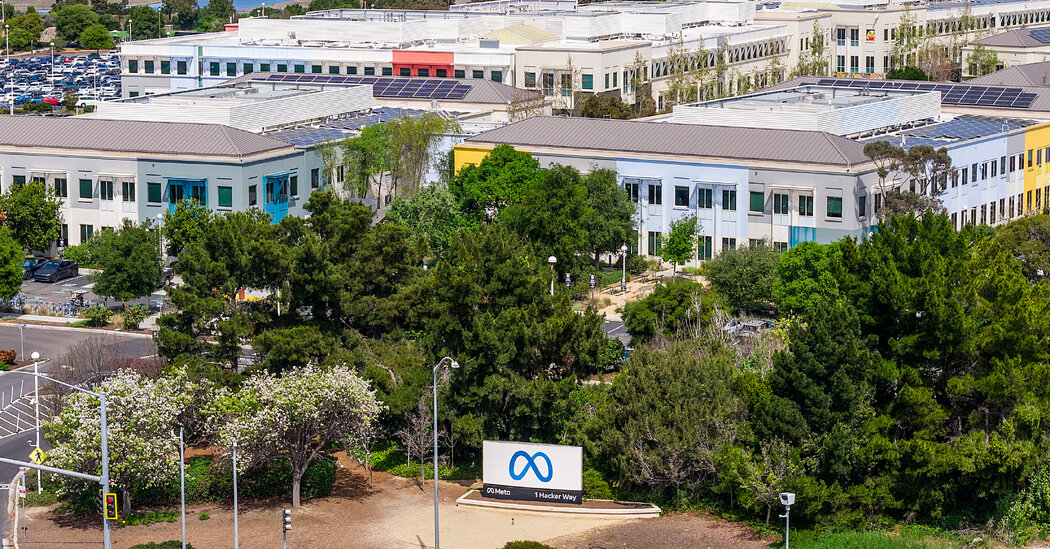
After Mr. Altman and others refused to give Mr. Musk control, he quit. Later that month, he announced his departure to OpenAI’s staff on the top floor of the lab’s office in San Francisco. He withdrew his financial support for the lab.
Forced to find other sources of funding, Mr. Altman bolted a for-profit company onto the original nonprofit and eventually raised $13 billion from Microsoft. The lab also curtailed its efforts to open source its technologies.
Mr. Musk claims in his suit that Mr. Altman and Greg Brockman, OpenAI’s president and a co-founder, intentionally manipulated and deceived him, falsely promising that they would chart a safer path to A.I. than profit-driven tech giants like Google and Microsoft. They fooled him, the suit claims, into donating tens millions of dollars to the OpenAI nonprofit.
The suit demands that OpenAI pay ten of billions of dollars in damages. In a recent filing, Mr. Musk amended his complaint to ask that these damages go to OpenAI’s nonprofit rather than to him.
“He is asking the court to return everything that was taken from a public charity — and to make sure the people responsible are never in a position to do this again,” Marc Toberoff, Mr. Musk’s lawyer, said in a statement.
OpenAI argues that Mr. Musk is merely trying to hamstring OpenAI as he mounts his own A.I. effort.
Documents released as part of the case seem to show that in 2017, Jared Birchall, the head of Mr. Musk’s family office, registered a company called Open Artificial Intelligence Technologies, which was meant to be a for-profit incarnation of OpenAI.
“His own words and actions speak for themselves,” OpenAI said in a court filing. “Elon not only wanted, but actually created, a for-profit as OpenAI’s proposed new structure.”