
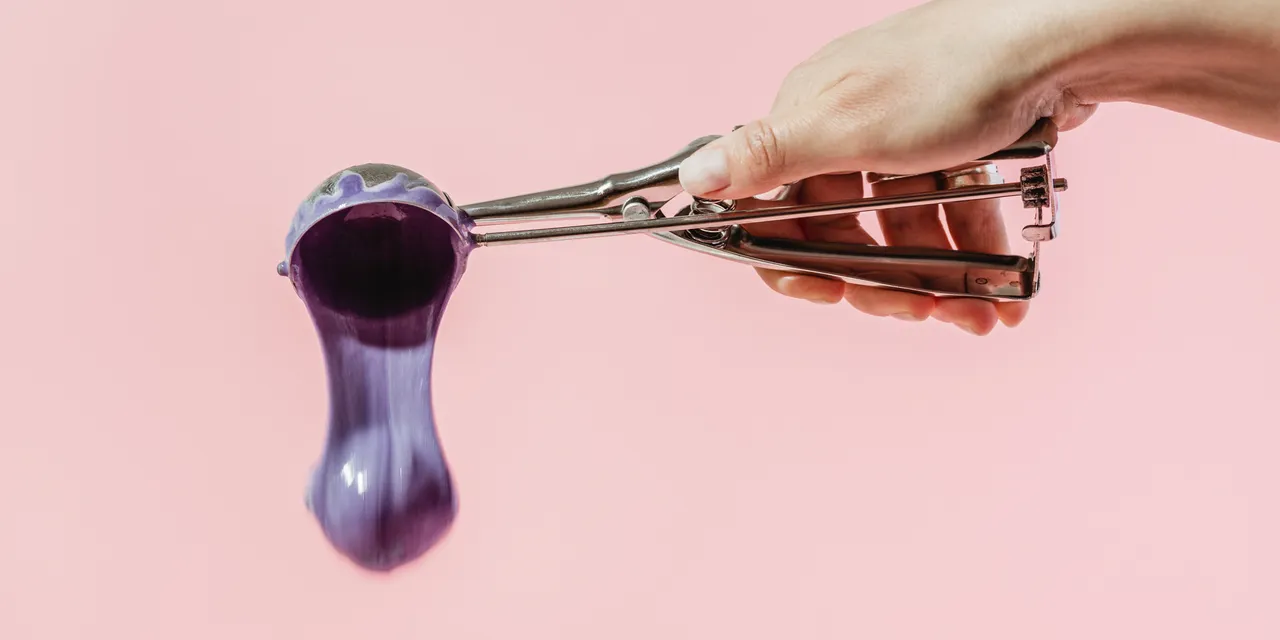
Social media has a way of turning medical misinformation into viral trends, and the latest example is making gynecologists everywhere cringe. Videos claiming that you can simply “scoop out” your period have racked up millions of views. Some posts even suggest that doctors can do this ahead of big events like weddings, vacations, or athletic competitions to avoid bleeding altogether.
It sounds almost too good to be true. And according to ob-gyns, it absolutely is.
The viral videos imply that menstrual blood—or even the uterine lining itself—can be removed in one quick step, preventing a period entirely. But that’s not how menstruation works.
“The duration of the menstrual cycle is determined by the shedding of the uterine lining, which passes through the cervix and the vagina prior to leaving the body,” Christie Cobb, MD, FACOG, tells SELF.
“Removing what is in the vagina with the fingers is essentially the same as inserting and immediately removing a tampon. It might flush what is present in the moment, but will not change the flow from the uterus.”
Not only is it not an effective strategy, it isn’t safe either.
“This is definitely not something to be attempted at home. First, there is the risk of injury from scrapes or cuts to the vaginal mucosa or cervix from finger nails,” Dr. Cobb says.
It can also increase the risk of infection by introducing bacteria or yeast, and it may throw off the vagina’s natural pH—especially if water or soap is involved, Dr. Cobb explains.
Your doctor won’t ‘scoop out’ your period
While doctors do perform a procedure called dilation and curettage (D&C), it is done for removing the remaining tissue after an abortion or miscarriage, or for collecting tissue samples to diagnose certain conditions that might cause abnormal bleeding. It isn’t used to shorten the duration of a patient’s period.
“In the classic D&C, you’re using a metal instrument to scrape the lining of the uterus,” Samantha Kaplan, MD, MPH, an ob-gyn at Boston Medical Center tells SELF.
“We also have suction triage. It can be manual or it can be electric, and these are procedures that might be done in someone who is postmenopausal or premenopausal… Even the most effective treatments to remove uterine lining are extensive,” she says.
The surgical procedure is also used to stop severe, medically dangerous bleeding, Karen Tang, MD, board-certified ob-gyn and author of It’s Not Hysteria, tells SELF.