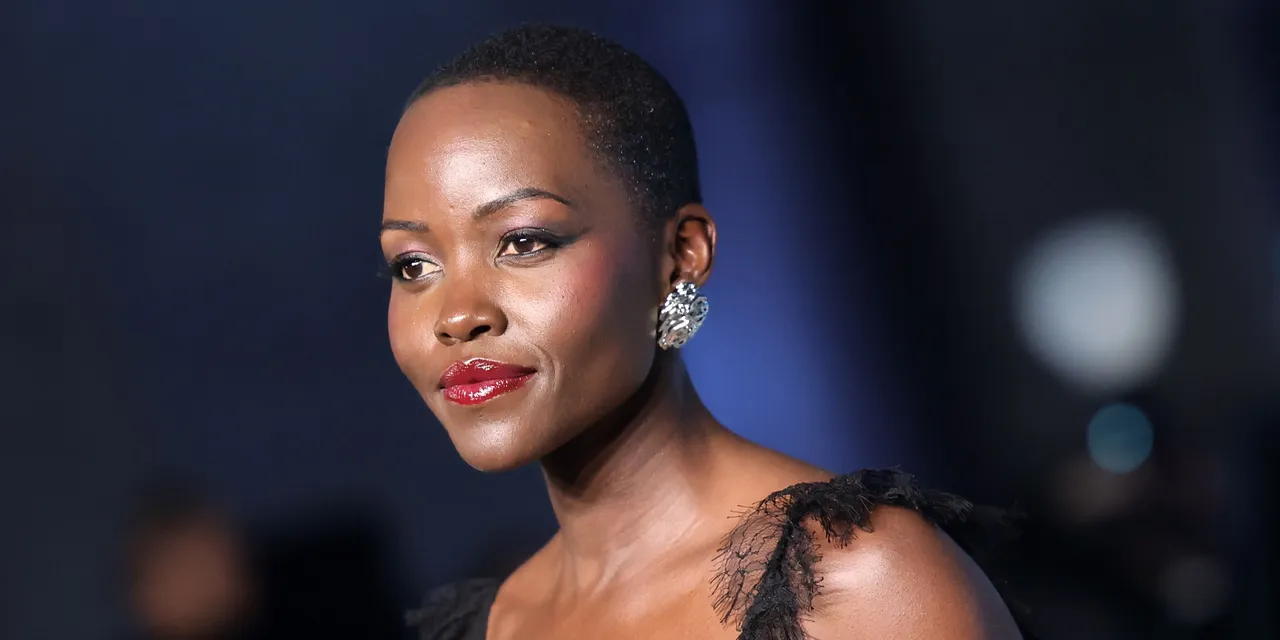
Lupita Nyong’o marked her birthday with a different kind of Instagram post on Sunday—one that highlighted not her age but the number of fibroids (a.k.a. usually non-cancerous uterine tumors) she has had.
“Today is my birthday, and it’s got me feeling reflective,” writes Nyong’o. “Not about age, but about a different number: 77. Over the course of my lifetime, I have carried 77 uterine fibroids: 25 surgically removed, and more than 50 still growing inside me today, the largest the size of an orange. (Swipe to see my MRI ‼️) This is not a rare story. It is just a rarely told one.”
In 2025, the actress revealed that she was diagnosed with fibroids back in 2014, and like far too many other women with the condition, had suffered silently for much longer, dealing with heavy periods and severe pelvic pain that she’d been led to believe were normal. Also like many others, the surgery Nyong’o had to remove the roughly 30 fibroids dotting her uterus at the time proved only a temporary fix, with upward of 50 redeveloping in the 12 years since. It’s the reason the actress launched a research grant last year to fund the creation of better, longer-lasting treatments, and doubled down last weekend with the social campaign #MakeFibroidsCount.
As Nyong’o recently told TODAY.com, fibroids are often addressed with a kind of “lightness, a casualness,” like how you’d refer to having a pimple—that is, if they’re talked about at all. It’s true that roughly half of people with uterine fibroids don’t feel anything. But for the rest, they can bring a host of seriously uncomfortable symptoms that all too often go overlooked and undertreated. And since asymptomatic fibroids can become symptomatic at any point, it’s important to know what to watch for. Here are six sometimes-subtle signs you might have uterine fibroids.
1. Your periods are particularly heavy or erratic.
Heavy menstrual bleeding can happen for a lot of reasons—say, you’re on a new birth control pill or certain days of your cycle just bring a stronger flow. But if your period lasts longer than seven days; you need to change your tampon, pad, or menstrual cup every two hours or more; or your periods cause a lot of cramping, uterine fibroids could be at play.
“Fibroids are one of the most common causes of abnormal bleeding [from the uterus] that we see in gynecology,” Sara Kim, MD, ob-gyn and clinical assistant professor at Stony Brook Medicine, tells SELF. Fibroids can generate period-like symptoms outside of your cycle too, Dr. Kim explains, like bleeding and cramping even when you’re not menstruating. “Someone may have a period and then, a week later, have days of bleeding again due to the fibroid,” she says. And the large amounts of blood loss can trigger fatigue and even put you on a path toward anemia, as Nyong’o reportedly experienced.