
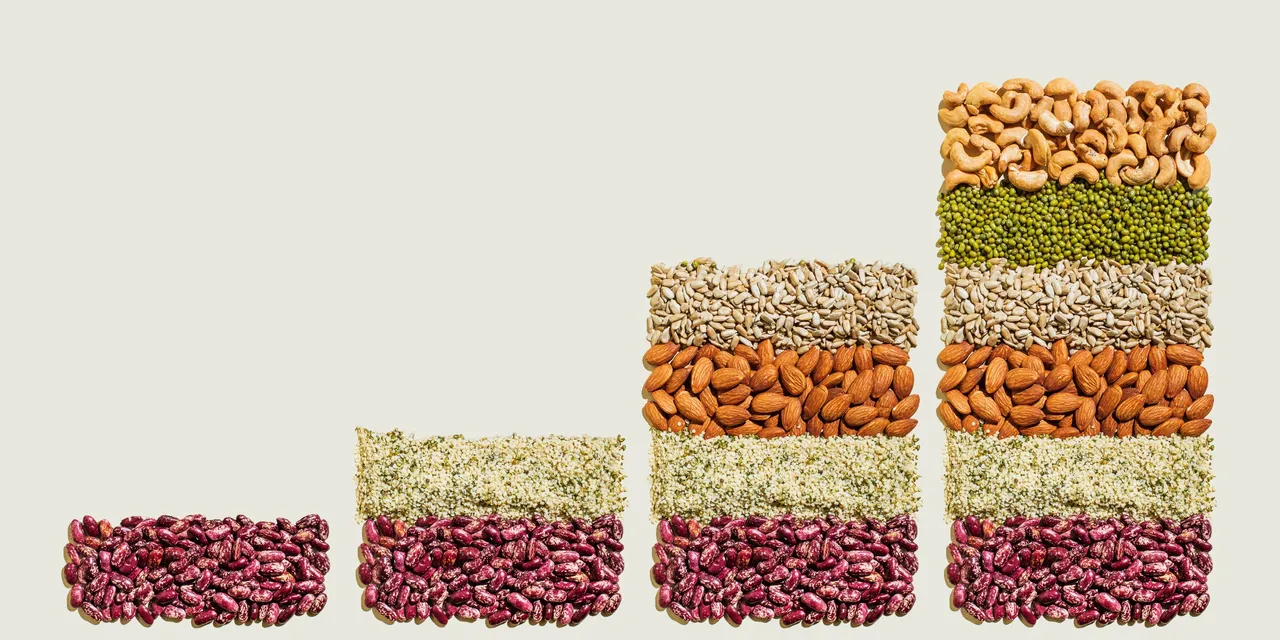
What exactly is ‘fiber training’?
Fiber training is exactly what it sounds like: training your body to handle fiber better. It’s all about “slow, consistent increases in fiber to help you build your tolerance…while minimizing the potential symptoms,” Nielsen says.
You can think of fiber training kind of like preparing for a race. “In much the same way that you wouldn’t go out and run a marathon tomorrow if you haven’t run a mile before,” you need to work your way up to a high-fiber diet, Nielsen says. Similarly, Dr. Ganjhu compares it to a weightlifting regimen. Rather than lifting 50-pound weights right off the bat, “you kind of have to adjust slowly,” she says. “You start off with 10. When that becomes easy, you go to 20, then you go to 30”—and so on.
Fiber training is especially critical if you’re constipated at the outset, as many people are, according to Nielsen. Even though fiber can help prevent and alleviate constipation, too much at once can actually make an existing issue worse by overwhelming your gut. “When you add a ton of fiber to an already backed-up system, it’s kind of like a bottleneck on the highway,” Nielsen says: If you try to shoehorn four lanes into one, you’re going to end up with a jam on your hands.
How to start fiber training
Now that you know fiber training entails steadily increasing your fiber intake, you’re probably wondering what that looks like on a more practical level. Before we share specifics, some context for how much fiber you actually need might be helpful. Per the federal Dietary Guidelines for Americans, 2020-2025, women should aim for 28 grams of fiber daily from ages 19 to 30, 25 grams of fiber daily from ages 31 to 50, and 22 grams of fiber daily starting at age 51, though some experts recommend even more—a helpful set of parameters if you’re not sure where to start.
While the ideal amount of fiber to add to your diet while fiber training can vary from person to person depending on health needs (like a constipation issue), most people are “looking at [adding] probably three to five grams at a time,” Nielsen says.
With that in mind, you’ll want to choose a food that has a fiber content in that ballpark—say, an apple (around four grams of fiber), a half-cup of chickpeas (around five grams of fiber), a tablespoon of chia seeds (around five grams of fiber), or two tablespoons of ground flax (around four grams of fiber)—and eat a serving every single day until you feel like your body has adjusted (read: you’re not experiencing any additional bloating, gas, or other GI side effects). This process typically takes around five to seven days, according to Nielsen, but everyone’s digestive system is different, so don’t worry if you need more (or less!) time. “It really is about listening to your body and individualizing the rate at which you increase,” Nielsen says. “You have to follow your symptoms and go slow,” Dr. Ganjhu agrees.